Starting a garden from scratch can seem overwhelming when you are looking at an empty backyard, patio, or a few containers and wondering where to begin. What should you plant? How much sunlight do you need? Do you need raised beds? What kind of soil should you buy? And how often should you water?
The good news is that you don’t need to know everything before you start. A successful beginner garden is less about getting every decision right and more about starting with a manageable space, choosing plants suited to your conditions, and paying attention to what happens as the season progresses.
This beginner’s guide to gardening walks you through the process step by step, from choosing a garden location and testing your soil to selecting plants, planting, watering, maintaining your garden, and dealing with common beginner problems. Whether you have a backyard, patio, balcony, or just a few containers, you can use these steps to create a garden that works for your space and experience level.
Quick Navigation
- How to Start a Garden: 7 Simple Steps
- Choosing Your Garden Location & Sunlight
- Understanding Soil and Garden Types
- Choosing What to Grow
- Planting, Watering & Mulching
- Garden Maintenance & Common Problems
- Beginner Garden Layout & Tools
- Cost & Shopping List
- Common Gardening Mistakes
- Your First 30 Days
- Beginner Gardening Checklist
- Frequently Asked Questions
How to Start a Garden: 7 Simple Steps
Starting a garden becomes much easier when you break it into smaller decisions. Instead of buying plants first and trying to figure out where they should go afterward, start by looking at your space and growing conditions.
The basic process is to choose the type of garden you want, find the best location, understand your sunlight and growing season, evaluate your soil, choose beginner-friendly plants, and then plant and care for them consistently.
Here’s the basic roadmap:
- Decide what type of garden you want.
- Choose the right location.
- Observe how much sunlight the area receives.
- Check your growing zone and frost dates.
- Prepare and understand your soil.
- Choose plants that are appropriate for beginners.
- Plant, water, and maintain your garden.
You don’t have to complete everything in one afternoon. Taking a little time to plan before purchasing plants can save you money and prevent many of the common mistakes beginners make.
Step 1: Decide What Kind of Garden You Want
Before choosing plants, think about what you actually want from your garden. A vegetable garden, herb garden, flower garden, pollinator garden, and ornamental garden can all have very different requirements.
If your main goal is growing food, you might begin with vegetables and herbs that you regularly use in your kitchen. If you want color and visual interest, flowers may be a better starting point. You can also combine the two by growing herbs, vegetables, and flowers together.
Don’t feel pressured to create a large garden immediately. A small garden that you can maintain is much more useful than a large garden that becomes difficult to manage.
In-Ground Garden
An in-ground garden uses the soil that is already in your yard. This can provide plenty of growing space, but the existing soil may need improvement depending on its texture, drainage, pH, and nutrient levels.
An in-ground garden can be a good option when you have enough yard space and want to eventually grow a larger number of plants.
Raised Bed Garden
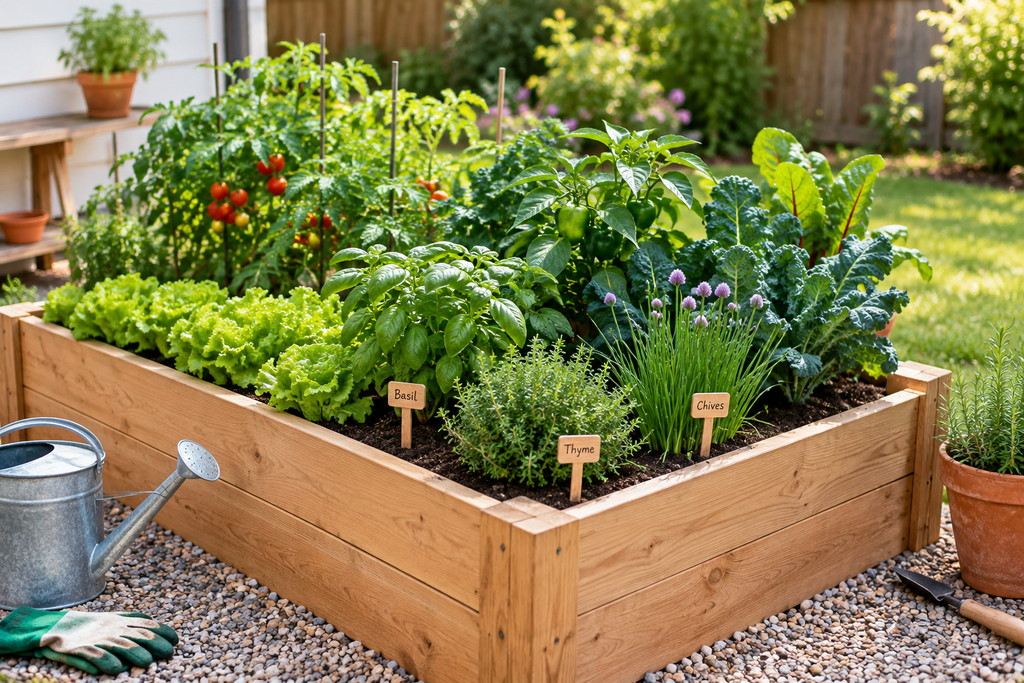
Raised beds give you more control over the soil and can make gardening easier in areas where the existing ground soil isn’t ideal. They also create clearly defined growing areas, which can make planning and maintenance simpler.
You don’t need a large collection of raised beds. One modest bed can be enough for a beginner to learn how different plants grow.
Container Garden
Container gardening is one of the easiest ways to start if you have limited space. Pots, grow bags, and other containers can work well on patios, balconies, decks, and other areas where an in-ground garden isn’t practical.
Containers are also useful if you aren’t sure whether you’re ready to commit to a permanent garden. You can start with a few plants and expand gradually.
Step 2: Choose the Right Garden Location
Once you know what kind of garden you want, look carefully at your available space. The best garden location isn’t necessarily the most convenient-looking empty spot. Sunlight, drainage, accessibility, and proximity to water all matter.
For a vegetable or herb garden, choose an area that receives enough direct sunlight for the plants you intend to grow. Many vegetables perform best with several hours of direct sunlight each day, while some leafy greens and herbs can tolerate less.
It is also helpful to place the garden somewhere you will see it regularly. A garden hidden at the far end of the yard can be easy to forget, especially during busy weeks. When your plants are visible and easy to reach, you’re more likely to notice when they need water, support, harvesting, or pest attention.
Think about convenience before you build anything permanent. Can you easily carry a watering can to the area? Can a hose reach it? Is the ground reasonably level? Does water collect there after rain?
A few minutes spent observing the location can prevent a lot of frustration later.
Step 3: Understand How Much Sunlight You Have
One of the biggest beginner gardening mistakes is choosing plants first and then discovering that the garden doesn’t receive the sunlight those plants need.
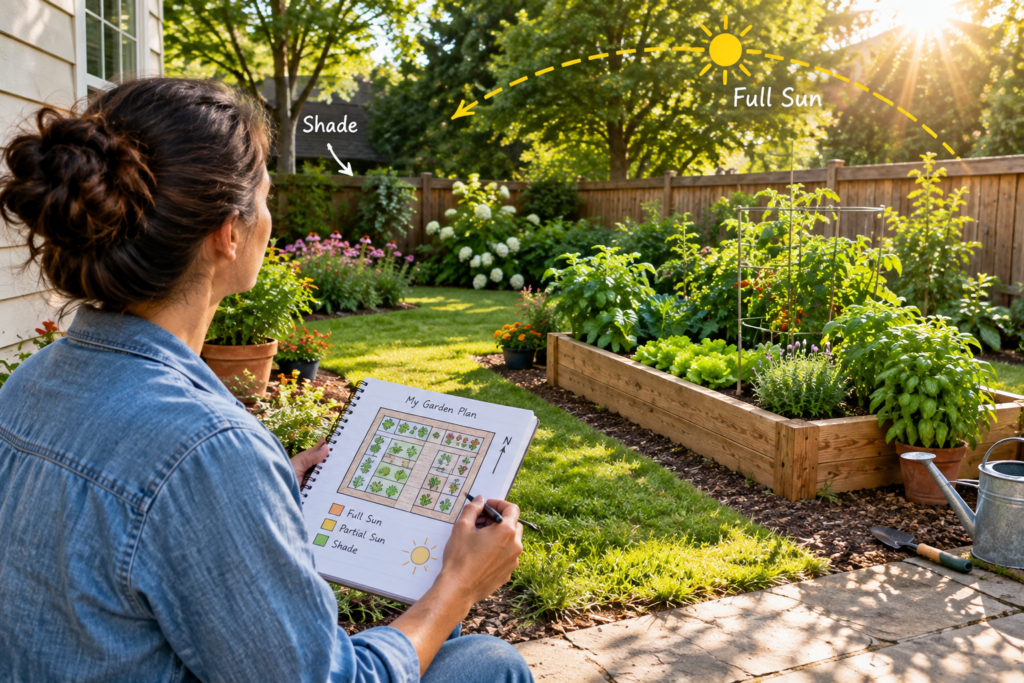
Before planting, observe your chosen location at different times of the day. Morning sunlight, afternoon sunlight, and shade from trees, fences, buildings, and neighboring structures can make a significant difference.
If you’re planning a vegetable garden, consider how the sun moves across the area rather than judging the location from a single observation. A spot that looks sunny at 9 a.m. might be shaded for most of the afternoon.
It’s helpful to make a simple note of the approximate number of hours the area receives direct sunlight. You don’t need sophisticated equipment for this. Your observations can give you enough information to choose plants that match the space.
If your location receives limited sunlight, don’t assume gardening isn’t possible. Instead, choose plants that tolerate the conditions you have rather than trying to force sun-loving plants into a shady location.
Step 4: Check Your Growing Zone and Frost Dates
Your location’s growing conditions affect which plants are likely to perform well and when you should plant them.
The USDA Plant Hardiness Zone Map is useful for understanding winter temperature patterns and determining which perennial plants are likely to survive in your area. However, your hardiness zone isn’t the same thing as your exact planting calendar.
For vegetables and annual plants, local frost dates and regional planting recommendations are often more useful when deciding when to sow seeds or transplant seedlings.
This is particularly important if you live in an area where planting dates can vary considerably from one region to another. Don’t rely solely on a generic national planting calendar. Local extension services, garden centers, and regional planting guides can provide more appropriate recommendations. Checking local recommendations before planting can help you avoid putting warm-season plants outside too early.
The goal isn’t to memorize every date. You simply want to understand whether you’re planning for cool-season or warm-season crops and whether your area is still at risk of frost.
Step 5: Understand and Prepare Your Soil
Soil is one of the most important parts of a garden, but beginners often make the mistake of assuming that every bag of garden soil or every patch of backyard dirt will work equally well.
Before adding fertilizer or large quantities of amendments, consider getting your soil tested. A soil test can provide information about pH and nutrient levels and can help determine whether lime, fertilizer, or other amendments are actually needed.
Testing is especially useful when you’re starting a new in-ground garden because it gives you information instead of requiring you to guess.
A basic home soil testing kit can be useful for getting a general idea of your soil conditions. For more detailed information, consider using a local soil testing service or extension service if one is available in your area.
Don’t automatically add fertilizer simply because you’re starting a garden. Too much of a nutrient can be just as unhelpful as too little, and soil testing gives you a better starting point.
Improving Garden Soil
If your soil needs improvement, organic matter can help improve its structure and water-holding characteristics. Compost is commonly used for this purpose, although the exact amount and type of amendment should depend on your existing soil and the needs of the garden.
For raised beds and containers, you have more control because you can start with an appropriate growing medium instead of relying entirely on the existing ground soil.
Raised Beds, In-Ground Gardens, or Containers?
There isn’t one universally best gardening method. The right choice depends on your available space, budget, physical setup, and the plants you want to grow.
| Garden Type | Best For | Main Advantage |
|---|---|---|
| In-ground | Larger yards | Lots of growing space |
| Raised bed | Beginners wanting more control | Easier soil management |
| Containers | Patios and small spaces | Flexible and portable |
| Grow bags | Vegetables and limited spaces | Lightweight and easy to move |
If you’re unsure, start small. One raised bed or several containers can teach you a great deal before you invest in a larger setup.
For container gardening, choose containers that are large enough for the plants you want to grow and have adequate drainage.
Fabric grow bags are another option for gardeners who want something lightweight and easy to store.
Remember that container size matters. A small pot may look attractive, but a plant that eventually develops a large root system can become stressed if its container is too small.
Step 6: Decide What to Grow
This is usually the most exciting part of starting a garden, but it can also be where beginners get carried away.
Instead of choosing twenty different vegetables because they all look interesting, think about what your household will actually eat. Growing food you enjoy makes the work more rewarding.
Beginner-friendly options often include plants such as lettuce, radishes, green beans, herbs, cherry tomatoes, peppers, and certain leafy greens, depending on your climate and growing season.
The easiest plants for you will depend on your location, available sunlight, and whether you’re growing in the ground, raised beds, or containers.
Start with a manageable number of plants. You can always expand next season after you’ve learned what works in your space.
Seeds vs. Starter Plants
Beginners often wonder whether they should start from seeds or purchase young plants from a garden center.
Seeds are generally less expensive per plant and give you access to many varieties. However, they require more attention during germination and early growth.
Starter plants are more convenient because someone else has already handled the earliest stage of growth. They can be particularly helpful when you’re starting later in the season or want to simplify your first garden.
There’s no rule that says you must choose one or the other. Many beginner gardeners use a combination of seeds and starter plants.
Read the Seed Packet
If you’re using seeds, don’t ignore the information printed on the packet. It can tell you when to plant, how deeply to sow the seeds, how far apart to space them, and how many days to expect before harvest.
Those instructions are general guidelines, so local conditions still matter. But they provide a useful starting point.
Seeds and Starting Supplies
If you want to experiment with seeds, a beginner seed-starting kit can make the process easier by giving you trays or containers designed for young plants.
A mixed vegetable seed collection can also be convenient if you want to try several crops without purchasing individual packets.
Step 7: Plant Your Garden
Once your location, soil, containers, and plants are ready, it’s time to plant.
Avoid overcrowding the garden simply because the plants look small when you put them in the ground. Young seedlings need room to grow, and plants that are packed too closely together can have reduced airflow and compete for water and nutrients.
Follow the recommended spacing on seed packets or plant labels. If you’re uncertain, give plants a little more room rather than squeezing too many into one area.
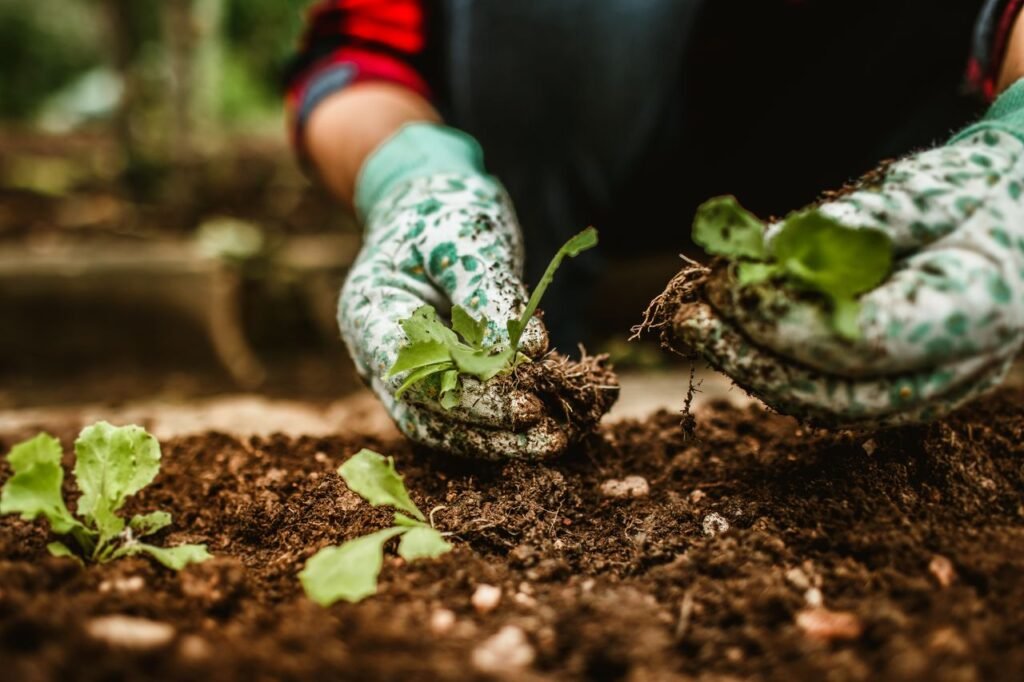
When transplanting seedlings, handle them gently and avoid damaging the roots. Water them after planting so the surrounding soil settles around the roots.
How Often Should You Water a New Garden?
Watering sounds simple, but it’s one of the areas where beginners often struggle. Some water too little, while others water constantly because they are afraid the plants will dry out.
Instead of following a rigid schedule, pay attention to the soil and weather. Newly planted seedlings generally need consistent moisture while they establish themselves, but the exact amount depends on temperature, rainfall, soil type, container size, and plant variety.
Water deeply enough to moisten the root zone rather than giving plants a tiny amount of water every few minutes. Containers may need more frequent attention because they can dry out faster than garden beds.
Morning is often a convenient time to water because plants have time to absorb moisture during the day. The most important thing is to establish a routine that allows you to notice changes before plants become severely stressed.
Watering Supplies
A basic watering can is enough for a small garden, while a hose with an adjustable nozzle can be more practical for larger spaces.
If you eventually have a larger garden, a soaker hose can make watering more convenient.
Use Mulch to Make Garden Maintenance Easier
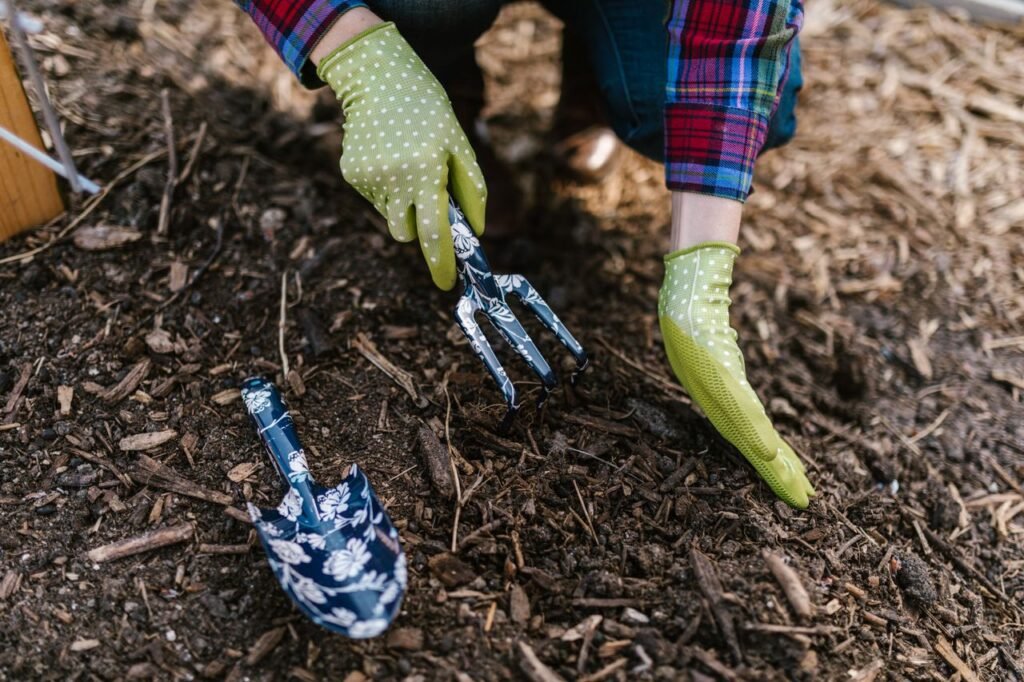
Mulch is one of the simplest additions that can make a garden easier to manage. It can help conserve soil moisture, reduce weed growth, and protect the soil surface from some weather-related stress.
Apply mulch around plants rather than piling it directly against plant stems or crowns. A moderate layer is generally more useful than creating a very thick mound.
Organic materials such as shredded leaves, straw, or suitable compost-based mulches can be useful depending on the garden.
Do You Need Fertilizer?
Not necessarily.
Fertilizer can be useful when plants have specific nutrient needs or when soil testing indicates that nutrients are lacking. But adding fertilizer without knowing what your soil needs can create unnecessary problems.
Start with healthy soil and appropriate growing conditions. If you use fertilizer, follow the product directions rather than assuming more will make plants grow faster.
Over-fertilizing can damage plants and contribute to nutrient imbalances. This is another reason soil testing can be valuable, particularly when you’re establishing a new garden.
Basic Garden Maintenance
Once your garden is planted, your job changes from building the garden to observing it.
Walk through the garden regularly. Look at the leaves, stems, soil, and overall growth of your plants. You don’t need to spend an hour every day. Even a few minutes can help you catch problems early.
Remove weeds when they’re small, check whether plants need support, harvest produce when appropriate, and watch for signs of insects or disease.
Regular observation is more useful than trying to create a complicated maintenance schedule.
How to Deal With Weeds
Weeds compete with your plants for water, nutrients, sunlight, and space. The easiest time to deal with them is when they’re small.
Pull or remove weeds carefully, especially when they’re growing close to young vegetable plants. Mulching can also reduce the amount of weed growth you have to deal with.
Try not to let weeds become a major project by ignoring them for several weeks. A few minutes of maintenance on a regular basis is usually easier than tackling an overgrown garden all at once.
Common Beginner Gardening Problems
Even a well-planned garden will have problems occasionally. The goal isn’t to prevent every problem but to learn how to recognize what your plants are telling you.
Yellow Leaves
Yellow leaves can have many causes, including watering problems, nutrient issues, aging leaves, poor drainage, pests, or environmental stress.
Don’t immediately assume that yellow leaves mean your plant needs fertilizer. First look at watering, drainage, sunlight, recent weather, and the overall condition of the plant.
Wilting Plants
Wilting can be caused by dry soil, excessive heat, root problems, transplant shock, or other issues.
Check the soil before watering. If the soil is already very wet, adding more water may make the situation worse.
Plants Aren’t Producing
If a plant is growing lots of leaves but producing little fruit or few flowers, consider its sunlight, temperature, maturity, and growing conditions.
Different plants also have different expectations. A healthy young plant may simply need more time.
Insects
Seeing a few insects doesn’t automatically mean your garden is failing. Some insects are harmless, and others can even be beneficial.
Identify the problem before treating it. Avoid reaching immediately for a broad treatment when you don’t know what you’re dealing with.
Gardening Through the Seasons
Your garden will change throughout the year, and what you can grow depends heavily on your local climate.
Cool-season vegetables may perform well during periods when warm-season crops struggle, while heat-loving vegetables generally prefer warmer conditions.
Rather than trying to memorize a national planting calendar, use local gardening resources for your region. Weather can shift planting dates from year to year, so treat calendar dates as guidelines rather than guarantees.
A seasonal garden can also be easier to manage when you think in terms of transitions. As one crop finishes, another can take its place when conditions are appropriate.
A Simple Beginner Garden Layout
You don’t need a complicated landscape design to create a productive garden.
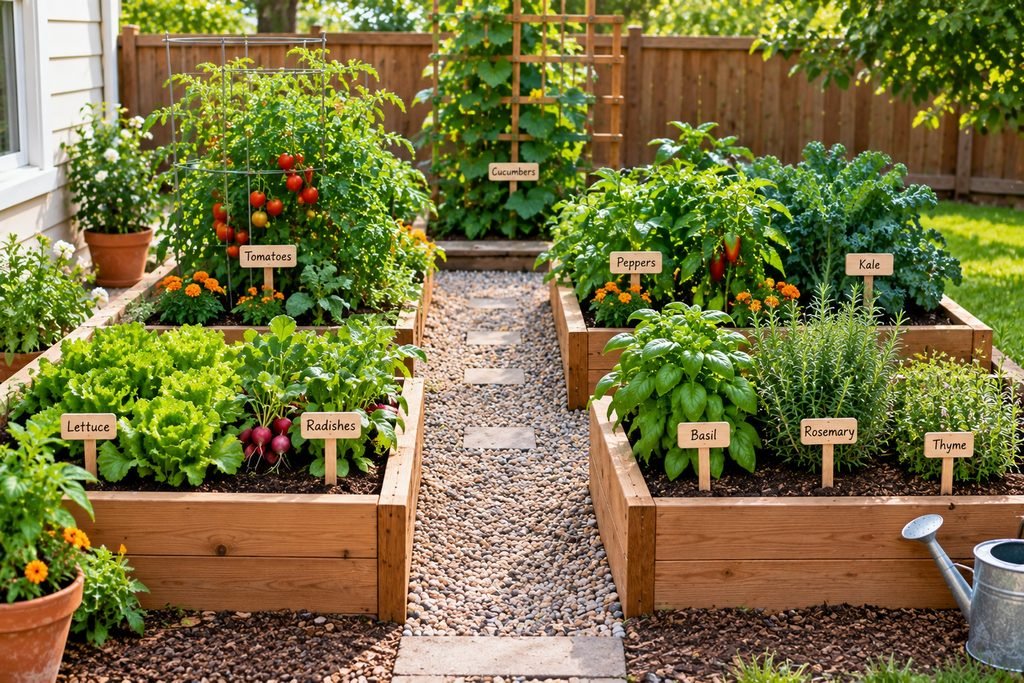
For a small raised bed, place taller plants where they are less likely to shade shorter plants. Keep frequently harvested herbs and vegetables in locations that are easy to reach.
Leave enough space to comfortably water, weed, inspect, and harvest. A garden that looks full in a diagram may become frustrating when you actually need to reach the plants.
A simple layout could include a few vegetables in one section, herbs along an accessible edge, and flowers nearby to add color and attract pollinators.
Beginner Gardening Tools: What Do You Actually Need?
You don’t need a garage full of gardening equipment to start.
For most small beginner gardens, a basic hand trowel, gardening gloves, pruning shears, watering can or hose nozzle, and possibly a small cultivator are enough for many everyday tasks.
A hand trowel is useful for planting seedlings and working around individual plants. A cultivator can help loosen soil and remove small weeds. Pruning shears are useful when plants need trimming or harvesting, while gloves protect your hands during routine maintenance.
If you’re shopping for a tool set, look for comfortable handles and sturdy construction rather than simply choosing the kit with the most pieces.
Beginner Garden Tools
You don’t need to purchase every gardening tool at once. Start with the tools required for the garden you actually have, then add equipment as you discover what you need.
Beginner Garden Shopping List
Here’s a practical starting list for a small garden:
Basic Supplies
- Seeds or starter plants
- Appropriate garden soil or growing medium
- Compost or other soil amendment if needed
- Containers, grow bags, or raised bed materials
- Mulch
- Watering can or hose
- Hand trowel
- Gardening gloves
- Pruning shears
- Plant labels
- Soil testing supplies
You can start with only the essentials. There is no need to spend hundreds of dollars before you’ve planted your first crop.
How Much Does It Cost to Start a Garden?
The cost of starting a garden can vary dramatically.
A few containers and seed packets can create a relatively inexpensive beginner garden. A larger raised-bed garden with lumber, soil, irrigation equipment, tools, plants, and other supplies can cost considerably more.
The biggest mistake is assuming that a successful garden requires an expensive setup.
Start with what you already have when possible. Reuse suitable containers, purchase only the tools you need, and expand gradually.
Once you know that you enjoy gardening and understand your space, you can invest in better equipment or expand the garden in future seasons.
10 Common Gardening Mistakes Beginners Should Avoid
1. Starting Too Big – A huge garden sounds exciting, but it can quickly become difficult to maintain. Start with a manageable area and expand when you’re comfortable.
2. Ignoring Sunlight – Plants need the right amount of light. Choosing plants without considering sunlight is one of the easiest ways to create problems before the season even begins.
3. Planting Too Many Varieties – Growing everything at once makes it harder to learn what works. Choose a small number of plants and learn from them.
4. Overwatering – More water isn’t always better. Check the soil and consider recent rainfall before watering again.
5. Ignoring Soil Conditions – Healthy plants depend on suitable soil. When possible, test your soil before making major amendments.
6. Planting at the Wrong Time – A plant can struggle simply because it was planted too early or too late. Follow local planting recommendations.
7. Planting Too Close Together – Small seedlings can look like they have plenty of space, but mature plants may need considerably more room.
8. Buying Too Many Tools – You don’t need every gardening gadget advertised online. Buy the tools that match your actual garden.
9. Ignoring Small Problems – A small weed, pest problem, or watering issue can become much harder to manage when ignored for weeks.
10. Expecting Perfection – Some plants will fail. Seeds won’t always germinate. Weather can change. Pests can appear. Gardening is a learning process, and an unsuccessful plant doesn’t mean you’re a bad gardener.
Your First 30 Days of Gardening
The first month is a good time to establish simple habits rather than trying to become an expert overnight.
Week 1: Plan
Choose your garden location, observe sunlight, decide what type of garden you want, and research plants appropriate for your growing conditions.
Week 2: Prepare
Test your soil if appropriate, prepare your containers or garden bed, gather basic supplies, and purchase seeds or starter plants.
Week 3: Plant
Plant according to your local growing conditions and the recommendations provided with your seeds or plants. Water appropriately and monitor the garden closely.
Week 4: Observe
Look for new growth, weeds, pests, watering issues, and signs of stress. Begin developing a simple routine for checking your plants.
At the end of the first month, don’t worry about whether the garden looks perfect. Focus on what you’ve learned.
Beginner Gardening Checklist
Before planting:
- Choose the type of garden you want.
- Select a suitable location.
- Observe sunlight throughout the day.
- Check your local growing zone and frost information.
- Decide what you want to grow.
- Test your soil if appropriate.
- Prepare your soil, containers, or raised bed.
- Purchase only the basic tools you need.
After planting:
- Water according to plant and weather conditions.
- Check plants regularly.
- Remove weeds while they’re small.
- Watch for pests and plant diseases.
- Add mulch where appropriate.
- Support plants that need it.
- Harvest at the appropriate time.
- Take notes about what worked and what didn’t.
Keeping a simple gardening notebook can be surprisingly useful. Write down what you planted, when you planted it, how the plants performed, and anything you would change next time.
Frequently Asked Questions
How do I start a garden if I have never gardened before?
Start small. Choose a manageable location, understand the available sunlight, select a few plants that are appropriate for your climate, and focus on learning their basic needs. You don’t need to know everything before you plant your first garden.
What is the easiest garden for beginners?
A small container garden or raised bed can be a good starting point because you have more control over the growing environment. The best option depends on your available space and the plants you want to grow.
How many plants should a beginner start with?
There is no perfect number, but starting with a handful of plants is usually easier than planting dozens of varieties. Choose plants you actually want to grow and eat or enjoy.
Should I start with seeds or plants?
Both are good options. Seeds can be economical and offer more variety, while starter plants are convenient and give beginners a head start. Using a combination can be a practical approach.
How often should I water my garden?
There isn’t one watering schedule that works for every garden. Check the soil, consider rainfall and temperature, and pay attention to your plants. Containers generally dry out faster than garden beds.
Do I need fertilizer when starting a garden?
Not always. Soil testing can help determine whether nutrients are needed. Avoid automatically adding fertilizer without understanding what your soil requires.
What should I grow in my first garden?
Choose plants that match your climate, sunlight, space, and interests. Vegetables and herbs that you regularly use can make a particularly rewarding first garden.
What if my first garden fails?
Treat it as information rather than failure. Gardening involves weather, soil, pests, plant varieties, and timing, and sometimes things simply don’t work. Take notes, identify what may have caused the problem, and use that knowledge in your next attempt.
Final Thoughts: Start Small and Learn as You Go
Starting a garden from scratch doesn’t require a perfect backyard, expensive equipment, or years of experience. What matters most is choosing a manageable space, understanding its sunlight and growing conditions, preparing the soil appropriately, and selecting plants that fit your environment.
Your first garden may not produce everything you hoped for. That’s completely normal. You may discover that one vegetable thrives while another struggles, that a particular location receives less sunlight than you expected, or that you prefer containers to traditional garden beds.
Those discoveries are part of becoming a better gardener.
Start with a small area, pay attention to what your plants are telling you, and make adjustments as you go. Over time, the decisions that seem complicated today will become much more familiar.
Most importantly, don’t wait until you know everything. Choose a small space, plant a few things you genuinely want to grow, and start learning from there.
More Gardening Guides
If you’re building your gardening knowledge step by step, you may also want to explore these related guides on My Crazy Decor:
- Beginner’s Guide to Indoor Gardening: Easy Steps to Get Started
- Top Outdoor Gardening Trends You Need to Try This Year
- Eco-Friendly Gardening: How to Create a Sustainable Backyard Oasis
- Affordable Outdoor Decor for Summer Patio Style
- More upcoming guides covering plant care, garden design, seasonal gardening, and practical outdoor spaces.